
On October 20, 2025, Anthropic announced "Claude for Life Sciences", a company specializing in the life sciences field. This is an initiative that supports the entire research process (literature research, hypothesis formulation, experimental protocol creation, bioinformatics analysis, and drafting of regulatory documents) using agent skills that emphasize connectors with research tools and reproduction of procedures. Performance improvements for Sonnet 4.5 and collaboration with industry partners were also announced.
In this article, we will provide an overview of "Claude for Life Sciences" announced by Anthropic, its main functions, implementation flow, fee structure, and safety initiatives, and explain the specific direction of its use in research and development work.
table of contents
- table of contents
- Key features of Claude for Life Sciences
- Research connector
- Ensuring reproducibility with Agent Skills
- Performance improvements and artifact output with Sonnet 4.5
- Prompt library and implementation assistance
- Comparison of Claude for Life Sciences and conventional methods
- Usage scene
- Introduction and fee structure
- Security and compliance
- Points to check when considering introduction
- summary
Key features of Claude for Life Sciences
First, we understand "what it can do" with a focus on functionality.
Research connector
Access data and diagrams stored on each platform directly from Claude.
Benchling: Responses with linkbacks to lab notes and recordings
BioRender: Search for verified diagrams, icons, and templates
PubMed: Access millions of biomedical publications and clinical studies
Wiley Scholar Gateway: Authoritative snippets of peer-reviewed papers
Synapse.org: Share and reference collaborative research data
10x Genomics: Manipulating single cell and spatial analysis with natural language
It also touches on common business tools (Google Workspace, Microsoft SharePoint/OneDrive/Outlook/Teams) and collaboration with Databricks and Snowflake. This is an implementation that reduces the "back and forth" of research work.
Ensuring reproducibility with Agent Skills
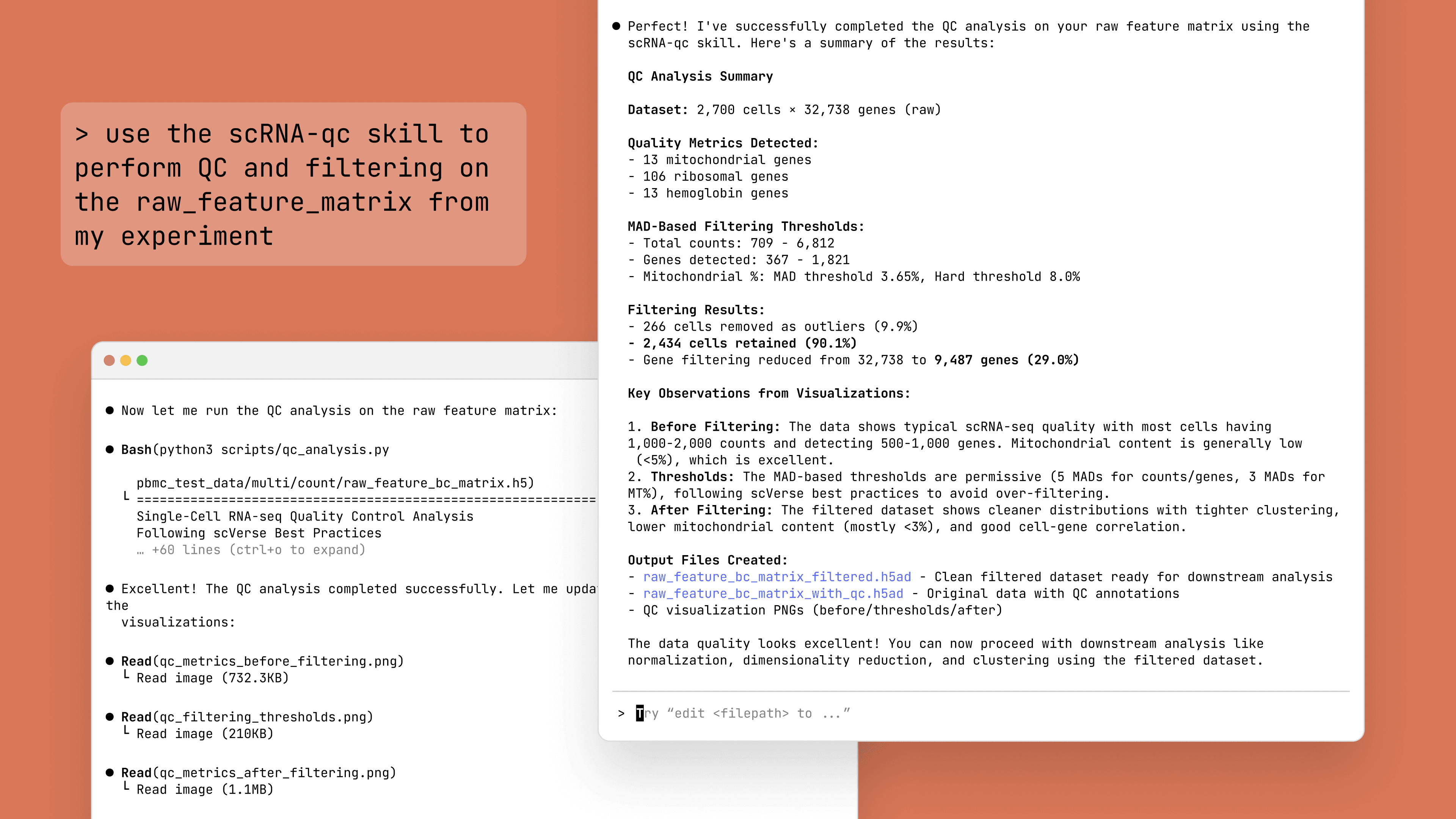
"Skills", which are bundles of instructions, scripts, and resources, are loaded only when necessary to improve the reproducibility of specific tasks. prepared by the officialsingle-cell-rna-qc(according to scverse best practices), it is also assumed that you can create your own skills.
Quote:https://www.anthropic.com/news/claude-for-life-sciences
Performance improvements and artifact output with Sonnet 4.5
Sonnet 4.5 has announced improvements over previous generations in understanding research procedures and bioinformatics evaluation, and analysis results can be organized in slides, documents, and notebook formats. Its strength is that it can be directly linked to the final work product.
Prompt library and implementation assistance
It provides a collection of prompts for each purpose, such as literature review, protocol creation, and data analysis, as well as a dedicated support system. Even first-time teams can get up and running using best practices.
Comparison of Claude for Life Sciences and conventional methods
What is important is not only the breadth of functionality, but also the differences in "sets" including operation, reproducibility, and safety.
point of view | Claude for Life Sciences | Conventional general-purpose LLM usage |
|---|---|---|
data connection | Link back to Benchling/PubMed/BioRender/Wiley/Synapse.org/10x etc. with official connectors | Mainly search/copy/paste and individual collaboration |
Reproducing the steps | Agent Skills includes procedures and scripts that can be reproduced | Depends on prompt adjustment |
model performance | Sonnet 4.5 improved with Protocol QA etc. | Optimization of research area is limited |
Deliverables | Supports formatting into slides/documents/notebooks | Formatting is done manually, mainly using generated text. |
Procurement route | Claude.com/AWS Marketplace (GCP is planned) | Via various APIs and external vendors |
These differences improve the productivity of the long line from research to regulatory documents.
Usage scene
It can be applied to a wide range of areas, from upstream R&D to pharmaceutical affairs, and shortens repetitive work in the field.
Literature review and hypothesis formulation
Output with summaries and citations of related papers allows for research that maintains verifiability.
Protocol/SOP/Consent Document
We support the creation of drafts that allow you to return to the original source through collaboration with Benchling.
Bioinformatics analysis
Analyze and visualize genomic data using Claude Code, and organize results into slides and documents.
Regulation/Quality
Assist with drafting application drafts and compliance materials.
Examples include testimonials from Sanofi, Benchling, Broad Institute, AbbVie, and Novo Nordisk.
Introduction and fee structure
For a smooth evaluation and transition to production, it is easier to manage if you check the entrance and costs first.
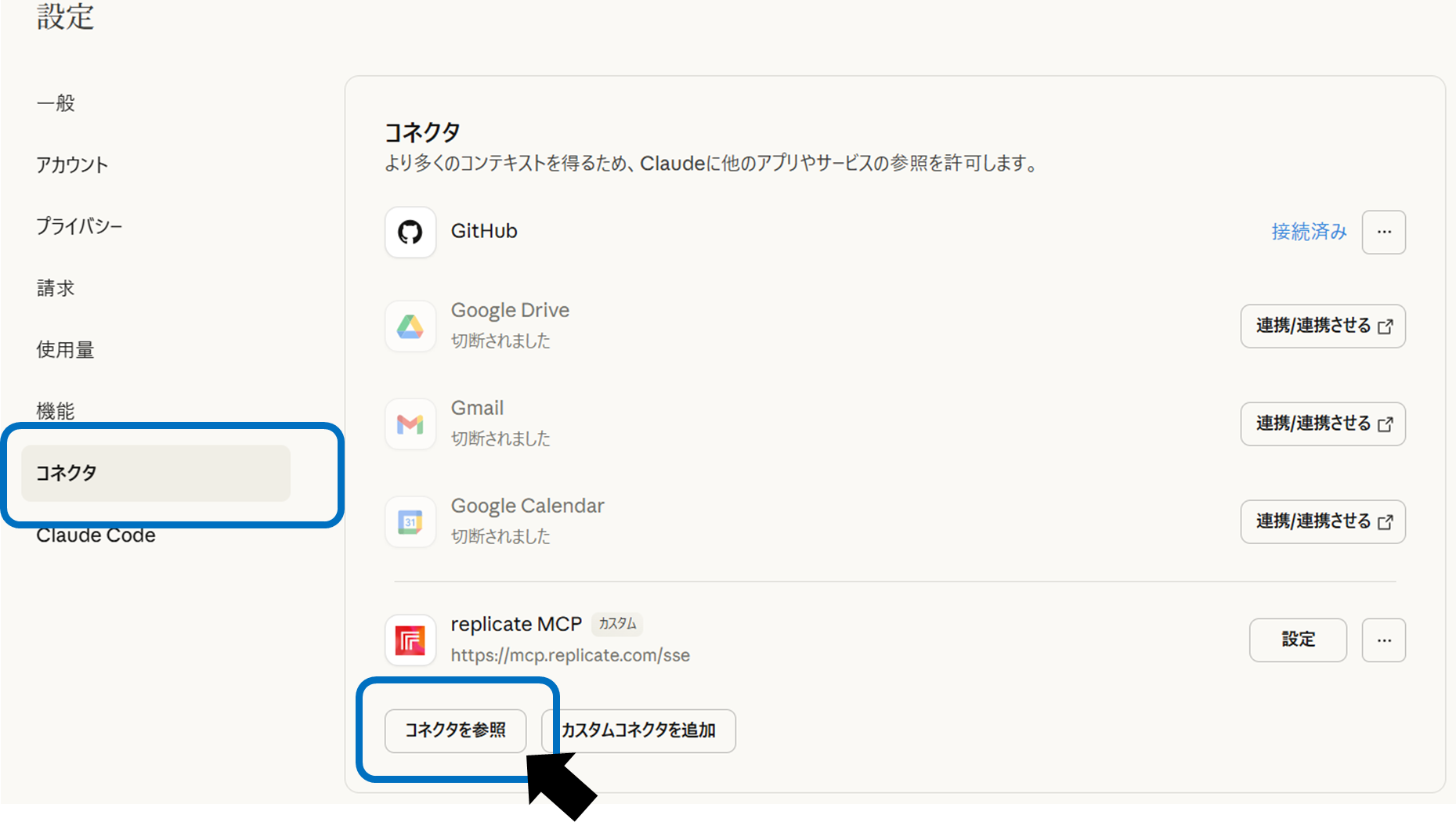
Activate your plan on Claude.com and add the necessary connectors such as Benchling, PubMed, BioRender, 10x, etc. from "Connectors".
Skills are created and enabled according to a dedicated guide, and loaded according to the desired task (e.g. QC for single-cell RNA-seq).
Estimated price (as of October 2025/USD)
The plan is seat charge, and the API is token usage. Consider using them together depending on the purpose.
plan | Price (USD) | remarks |
|---|---|---|
Pro | $17/month (annual contract, equivalent to $20/month) | For high-level personal work |
Max | $100~/person/month | High load & advance function |
Team (Standard) | $25/person/month (annual contract, minimum 5 people) | Includes management functions |
Team (Premium) | $150/person/month (minimum 5 people) | With Claude Code |
Enterprise | Inquiry required | Audit log/Compliance API, etc. |
API example: Sonnet 4.5 Input $3/MTok (≤200K), Output $15/MTok (≤200K). For detailsOfficial pagePlease check for updates.
Security and compliance
In order to maximize the effectiveness of implementation, it is essential to have a solid foundation of safety, control, and legal compliance.
Anthropic deploys AI Safety Level 3 (ASL-3) and presents operational standards that include deterring abuse in high-risk areasI'm doing it. Furthermore, we have obtained certifications such as ISO 27001:2022, ISO/IEC 42001:2023, and SOC 2 (Type I), so when handling sensitive data such as medical information, you must confirm consistency with your company's information management policy.
Regarding access privileges, the connector is designed to respect the existing privileges of each system.Developed an operational guide based on the "principle of least privilege" and "prevention of data exfiltration"I will. Also, to ensure observabilityUtilization of audit logs and Compliance API is recommendedwill be done.
Benchmark scores (Protocol QA, BixBench, etc.) are only reference indicators to measure task suitability, and to determine whether automation is possible,It is realistic to proceed with verification using actual business data in parallel.is.
TheseBy establishing the prerequisites for safety and compliance, it is possible to steadily expand the scope of implementation while meeting quality, accountability, and security requirements.It will be.
Points to check when considering introduction
In order to reduce "oversight" from short-term PoC to actual production, we will clearly state the matters agreed upon in advance.
Use case definition
Clarify target operations, judgment indicators, and review system (including use of prompt library).
Data linkage
Connector configuration, authority design, and log maintenance policy for Benchling, PubMed, etc.
reproducibility
Formulation of Agent Skills template (SKILL folder) and maintenance rules.
Deliverable standards
Output format and storage policy for slides/documents/notebooks.
Procurement/Expenses
Seat billing and API usage allocation, contract requirements via AWS Marketplace.
By creating a template of agreements, it becomes easier to add use cases and expand locations.
summary
Claude for Life Sciences presents a complete suite of official connectors to research tools, Agent Skills to help reproduce procedures, improved Sonnet 4.5 performance, and a prompt library and support systemIt is characterized by its approach. By connecting literature review, protocol creation, analysis, and drafting of regulatory documents through dialogue, and organizing the results as slides and documents, you can reduce the amount of back and forth between research and work. During implementation, it is practical to first solidify the data authority, audit, and cost design, and then first verify the combination of Skills and connectors in a small-scale use case. As the next step, please flesh out your PoC plan and cost estimate (seat charge + API) in your in-house environment.